Tek and I did the Bike for Breath again this year. You can read all about it on chsrfm.ca Who says fat girls can’t ride bikes? Who says we can’t bike long distances, no one, right?
I wrote a thing! 2013 Bike for Breath report
Link
Reply
Tek and I did the Bike for Breath again this year. You can read all about it on chsrfm.ca Who says fat girls can’t ride bikes? Who says we can’t bike long distances, no one, right?
 Where in I ramble about what’s been going on lately, inspired by the Dog Days of Podcasting project. My short episode ended up not being that short, oops.
Music by Jessica May
Promo Flash Pulp
both can be found at FlashPulp.com
(347) NUTTY42 or (347) 688-8942
www.facebook.com/groups/nuttybites/
Created by NIMLAS SUDIOS This work is licensed under a Creative Commons Attribution-NonCommercial-NoDerivs 3.0 Unported License.
Podcast: Play in new window | Download (Duration: 17:23 — 32.0MB) | Embed
Subscribe: RSS
 Joined with me in this Episode is Marc Cabot of EPIC!, this is a Nutty Bites & EPIC! crossover episode. We interview Mike Dougherty from Big Damned Films about his upcoming movie and crowd funding project Z*Con! Then we debate over our favorite style of zombies, fast zombies, slow zombies, con crud zombies, the Borg, oh my!
Promo: Dead Ends Horror Anthology
(347) NUTTY42 or (347) 688-8942
www.facebook.com/groups/nuttybites/
Created by NIMLAS SUDIOS This work is licensed under a Creative Commons Attribution-NonCommercial-NoDerivs 3.0 Unported License.
Podcast: Play in new window | Download (Duration: 48:15 — 88.5MB) | Embed
Subscribe: RSS
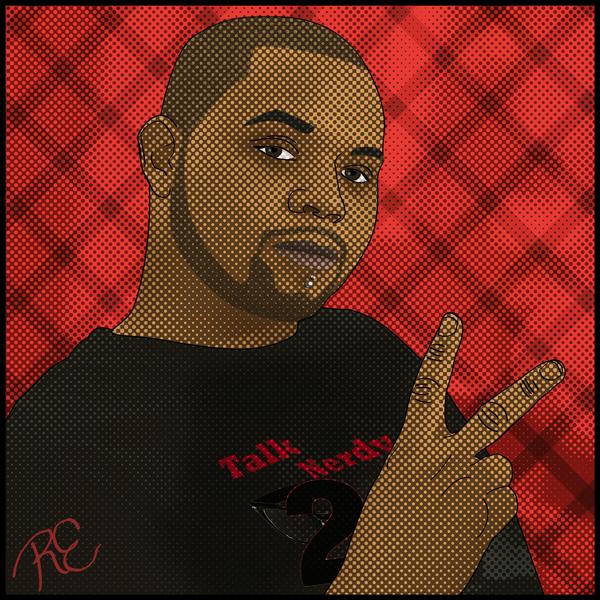 My good friend Jason of the Talk Nerdy 2 Me podcast, had a big bump in the road of life recently, so the Flash Mob (the fans/community of folks that listen to the Flash Pulp Podcast) got together to try and cheer him up. This is my contribution, a pop art icon of him, I made it using an image I took of him, and with the suggestion of Tek I added the logo of his podcast to his t-shirt. I sent him a Giclee Print of it before posting it here, so his surprise was first seen in the mail :)
 I chatted with Pattie Kelly from the Indiegogo project Swallow Your Bliss; a TV sitcom pilot about the production of a cooking reality show. We talk about the project, some of our favorite TV chefs, and other things related to cooking, TV, and food!
Promo: Reader Writer Podcast
(347) NUTTY42 or (347) 688-8942
www.facebook.com/groups/nuttybites/
Created by NIMLAS SUDIOS This work is licensed under a Creative Commons Attribution-NonCommercial-NoDerivs 3.0 Unported License.
Podcast: Play in new window | Download (Duration: 40:29 — 27.9MB) | Embed
Subscribe: RSS